

When news broke about Melania Trump releasing a Spanish-language AI audiobook of her memoir, one detail jumped out: the Spanish edition was created in direct response to requests from the Spanish-speaking community, who wanted to hear her story in their own language.
Here’s a woman with a layered public and private life. A community wanted to hear her story in the language they use at home, at church, and around the dinner table. No secondhand summary, just her voice, speaking to them directly.
That moment captures what’s really at stake. AI gives us the tools, but it’s reach and genuine connection that give the effort meaning.
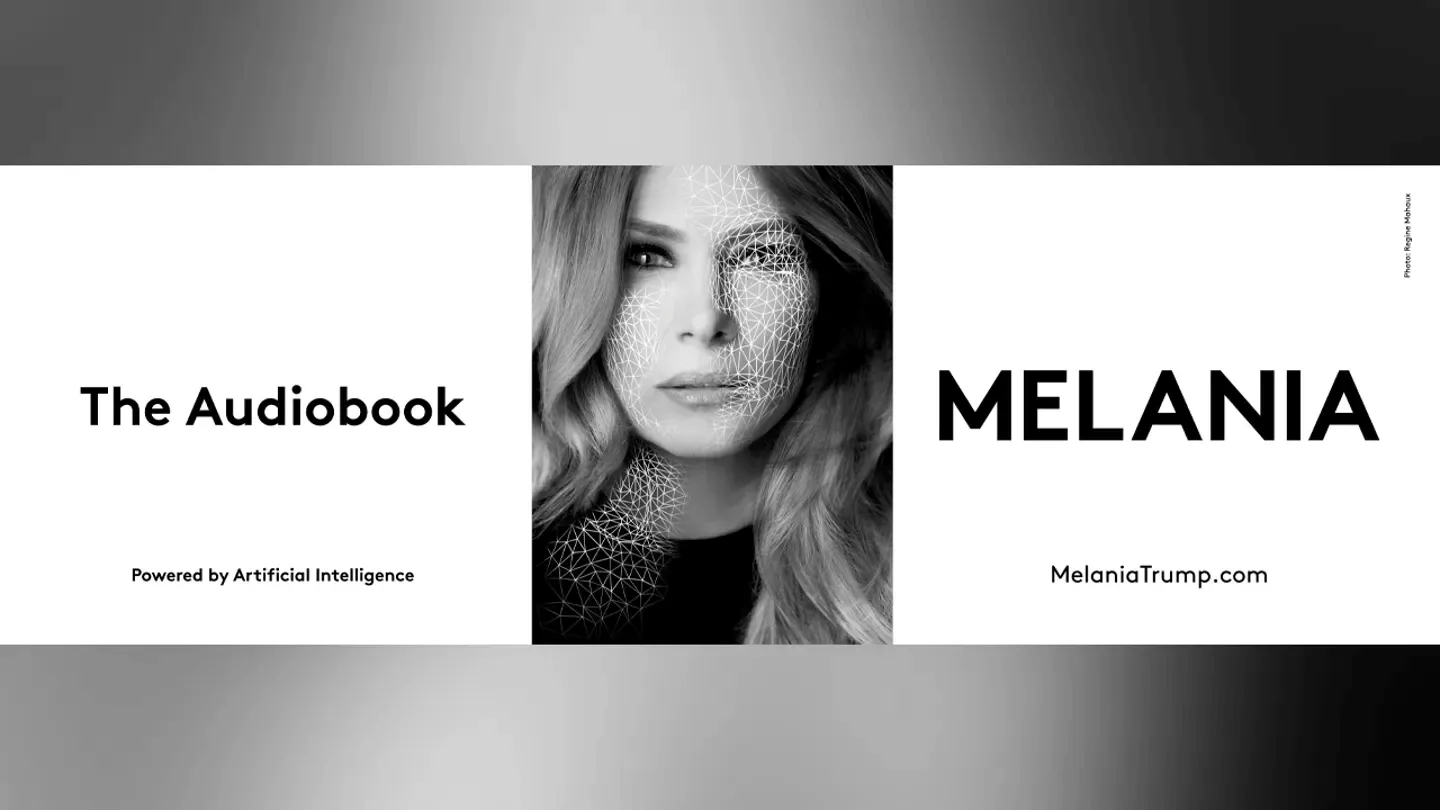
Image Source: Fox News
What Melania’s AI Spanish Audiobook Signals About Audience Demand
Melania Trump released her memoir first as an English-language audiobook. A new Spanish edition now uses AI audio to extend her voice to millions of Spanish-speaking listeners.
A few details matter for publishers and media leaders:
- The Spanish version responds directly to Spanish-speaking fans who asked for access.
- The goal involves preserving her “mannerism, purpose, and authenticity” in Spanish as well.
- Additional foreign-language versions sit on the roadmap.
This isn’t just a one-off, it’s part of a bigger trend. Audio leaders and publishers are seeing real momentum in Spanish audiobooks throughout the United States, Latin America, and Europe. Entire companies now focus on Hispanic audio and Spanish book distribution because the demand keeps climbing.
There is clear audience hunger for serious nonfiction, memoir, and journalism in Spanish:
- Recent estimates place the Spanish audiobook market on a path toward roughly 3 billion dollars by 2035, with growth near 9.5 percent each year.
- Industry reports from Bookwire highlight the United States as the fastest-growing region for Spanish-language audiobook consumption and describe Spanish audio listening in the US as an “established” habit.
- Publishers Weekly points to a surge in Spanish audio in the US and Latin America, along with a double-digit rise in companies focused on Hispanic audio.
From a publisher’s perspective, Melania’s project simply offers a visible example of a shift affecting every serious backlist.

The Human Impact: Who Hears These Stories Now
Talk about AI usually drifts toward models and features. But the human side? That’s where the real story lives.
You feel the impact most clearly when you focus on real people.
- A grandmother in Phoenix listening on her phone while she cooks, hearing a first lady talk about family, faith, or migration in Spanish.
- A college student in Dallas hearing a high-profile story in Spanish, then sharing clips with friends who move between Spanish and English every day.
- A first-generation kid listening to the same chapter as a parent, with no language gap between them.
That’s what true language access looks like in action.
Melania’s Spanish AI audiobook offers one example. Actor Matthew McConaughey now uses an AI version of his own voice to send Spanish audio messages to followers as well.
Authors across categories share a similar desire. They want audiences to feel their voice, not only read their words. AI voice tools grounded in consent and ethics give authors and publishers a way to reach audiences that traditional studio workflows often leave waiting.

Headphones on many books background, top view
The Backlist Opportunity: Author Voices, At Scale
Now shift from one person’s memoir to your entire list.
Every publisher with a meaningful backlist feels similar pressure:
- You have titles that would resonate deeply with Spanish-dominant and bilingual audiences.
- Traditional translation plus studio production adds cost, time, and complexity.
- Audio teams are already at capacity with English releases.
So you end up with a pile of “this would be great in Spanish” ideas that never leave the planning stage.
This is where AI voice and smart workflows really start to matter. Suddenly, your authors and editors can reach broader audiences without losing that creative spark.
You keep editorial judgment right where it belongs. Authors stay involved. And you layer scalable production and language capacity on top of your existing strengths.
A Practical 10-Point Checklist for Responsible AI Voice
Here is a simple, working framework I recommend for AI voice in publishing and media.
- Require written consent for any synthetic or cloned voice, with specific use cases and time frames.
- Use separate consent language when you extend that voice to new languages.
- Label AI-narrated works clearly in storefronts, descriptions, and metadata.
- Avoid using AI voices for topics the human talent has not approved in concept.
- Include clear exclusions in contracts for political, sexual, or highly sensitive content without extra sign-off.
- Keep a central registry of all approved AI voices with contracts, brand notes, and allowed uses.
- Put human editors and translators in the loop for every language version and every script.
- Maintain a documented process to respond quickly to impersonation or policy violations.
- Review your AI voice program regularly with legal and editorial leadership.
- Publish a short public statement that explains how you use AI voice and how you protect your audiences and authors.
Broadcasters are used to this kind of structure, they deal with compliance and standards every day. It works just as well for book publishers and audio teams.

FuturiBooks: Author-Approved, Multilingual Audio at Scale
Futuri has a long history with broadcasters, digital publishers, and audio-first brands. Products like TopicPulse spot the stories audiences care about in real time, then turn those stories into audio in fast, repeatable ways.
FuturiBooks takes that experience and puts it to work for authors and book publishers.
Here is how this looks in practice:
- Voice authenticity
The author records a reference session. FuturiBooks builds a high-quality AI voice from that, with written consent, guardrails, and clear usage rules. The voice reflects pacing, tone, and personality.
- Multilingual reach
Your team selects priority languages. Spanish usually comes first, followed by other strategic markets. Human translators and editors adapt the text. The AI voice delivers consistent performance across languages.
- Human-in-the-loop workflow
Editors oversee scripts and translations. Authors hear samples in each language and give feedback. Production teams retain control over timing, emphasis, and structure.
- Policy alignment
The 10-point checklist becomes part of your workflow. Legal and standards teams have real visibility into voice usage. Authors see a clear ethical stance instead of a vague “we use AI sometimes” disclaimer.
The result is simple for the listener.
Their favorite author literally speaks their language. The story feels personal. Trust stays intact.
Learn more about FuturiBooks, or schedule a demo today.
Learn more about FuturiBooks, or schedule a demo today.
Related insights

The “Hidden” Audio Market: Why You’re Leaving Revenue on the Shelf in 2026
Discover how AI audiobook production is unlocking the "silent" 70% of book catalogs. Learn how publishers are using human-in-the-loop AI to bridge the gap between traditional studio costs and growing listener demand in 2026.

Sounding Like Success: How Voice Replication Is Transforming Audiobooks
Discover how AI-powered voice replication is redefining audiobook production. Learn how authors and publishers can scale authentic narration, preserve creative identity, and future-proof their brands with FuturiBooks.

How We’re Helping Publishers Expand Their Authors’ Reach Without Adding to Their Workload
Discover how FuturiBooks blends AI speed with human expertise to create high-quality audiobooks that expand reach without extra publisher workload.